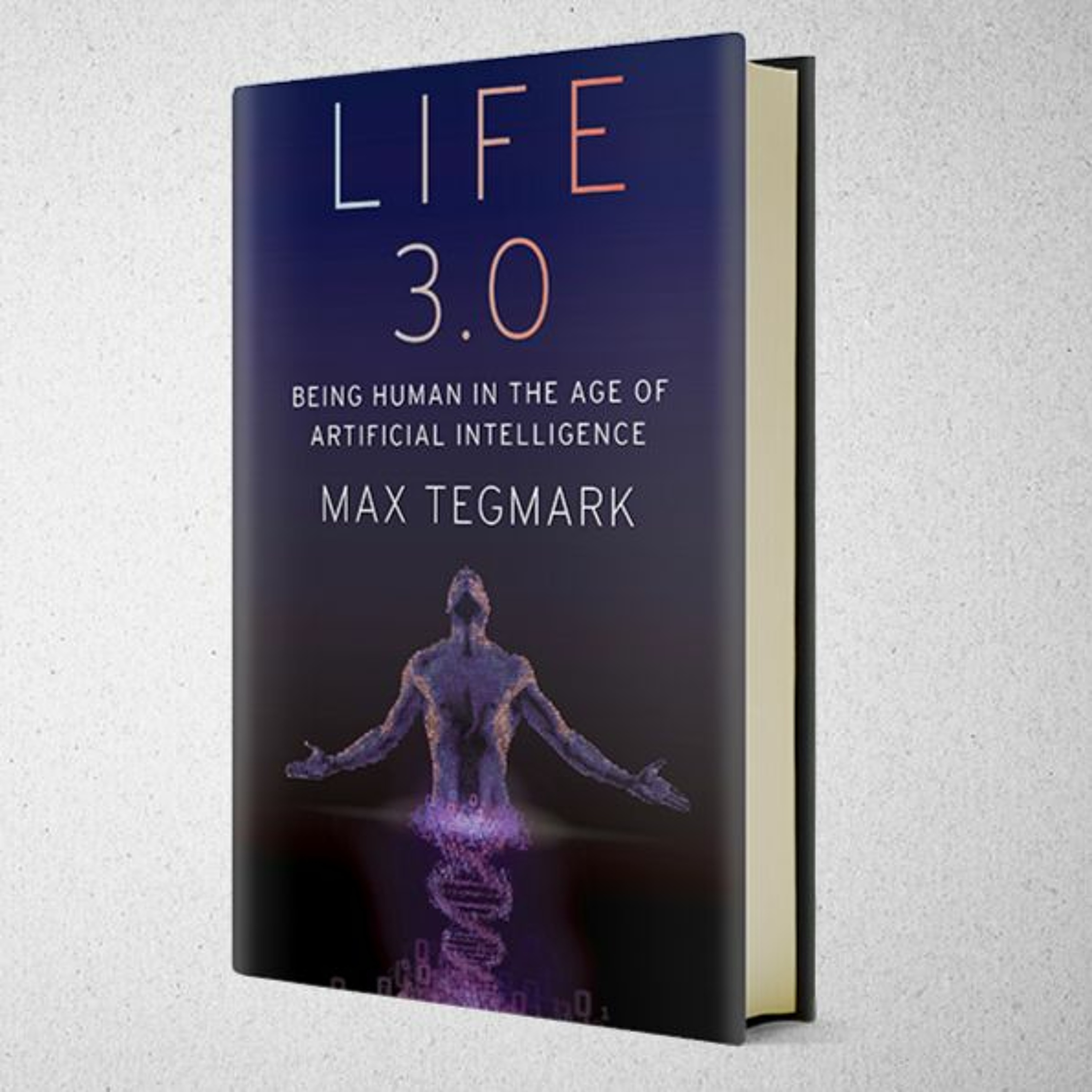
Life 3.0: Being Human in the Age of Artificial Intelligence with Max Tegmark
Elon Musk has called it a compelling guide to the challenges and choices in our quest for a great future of life on Earth and beyond, while Stephen Hawking and Ray Kurzweil have referred to it as an introduction and guide to the most important conversation of our time.
Elon Musk has called it a compelling guide to the challenges and choices in our quest for a great future of life on Earth and beyond, while Stephen Hawking and Ray Kurzweil have referred to it as an introduction and guide to the most important conversation of our time. "It" is Max Tegmark's new book, Life 3.0: Being Human in the Age of Artificial Intelligence. In this interview, Ariel speaks with Max about the future of artificial intelligence. What will happen when machines surpass humans at every task? Will superhuman artificial intelligence arrive in our lifetime? Can and should it be controlled, and if so, by whom? Can humanity survive in the age of AI? And if so, how can we find meaning and purpose if super-intelligent machines provide for all our needs and make all our contributions superfluous?
Peter Wildeford discusses methods for forecasting AI progress and why he sees AI as neither a bubble nor a normal technology, covering economic effects, national security, cyber capabilities, robotics, export controls, and prediction markets.
Inria researcher Carina Prunkl discusses why AI evaluation struggles to keep pace with general-purpose systems, including jagged capabilities, missed real-world behavior, misuse risks, de-skilling, red teaming, and layered safeguards.
Li-Lian Ang from Blue Dot Impact discusses how to build a workforce to defend against AI-driven risks, including engineered pandemics, cyber attacks, job disempowerment, and concentrated power, using a defense-in-depth framework for uncertain AI progress.